

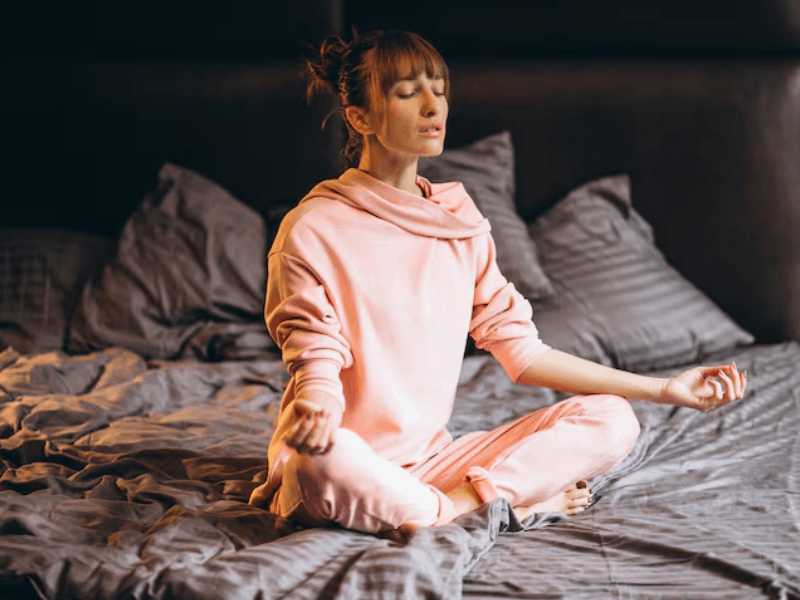
Struggling to fall asleep or stay rested? Meditation music for sleep can be a simple yet powerful tool to improve relaxation and enhance the quality of your rest. Many people underestimate the impact of sound and rhythm on the mind. Calming music can slow your heart rate, reduce stress, and guide your brain into a deeper sleep state.
In today’s fast-paced world, sleep disturbances are common. Stress, anxiety, and overstimulation from screens make it difficult to relax naturally. Using guided meditation or meditation music designed for sleep can help you transition smoothly from wakefulness to restorative rest, ensuring your body and mind recover fully overnight.
In this guide, we’ll explore how meditation music improves deep rest, techniques for incorporating it into your bedtime routine, and tips for maximizing the benefits.
For additional relaxation, see: Meditation for Stress Relief Before Bed: A Night Routine Guide.
How Meditation Music Enhances Sleep
Meditation music supports sleep by:
- Calming the Nervous System: Slows heart rate and lowers cortisol.
- Reducing Mental Clutter: Encourages relaxation and fewer racing thoughts.
- Guiding Brainwaves: Promotes alpha and theta waves associated with restful sleep.
- Supporting Deep Sleep: Improves duration of restorative REM sleep stages.
Research shows that listening to calming music before bed can improve sleep quality by up to 65% for adults with mild sleep disturbances (Journal of Sleep Research, 2023).
Tip: Choose music with a slow tempo (50–60 bpm) and minimal lyrics for maximum relaxation.
Best Meditation Music Practices for Sleep
Use Consistent Sleep Tracks
- Pick one or two favorite calming tracks.
- Consistency signals your body that it’s bedtime.
Pair Music with Guided Meditation
- Combine meditation music with sleep-focused guided sessions.
- Follow cues for breathing, body scan, or progressive relaxation.
Create a Bedtime Routine
- Start music 10–15 minutes before bed.
- Dim lights and avoid screens to enhance effectiveness.
Headphones or Speakers
- Use comfortable headphones or a speaker at low volume.
- Avoid abrupt sounds or distractions.
For more techniques, explore: Guided Meditation for Better Sleep and Relaxation.
How Meditation Music Reduces Stress
- Lowers Anxiety: Slow, melodic music reduces cortisol levels.
- Promotes Mindfulness: Encourages presence and awareness of breathing.
- Eases Tension: Helps relax muscles and mental tension before sleep.
Tip: Even daytime listening to meditation music can lower stress, improving your readiness for deep sleep at night.
Choosing the Right Meditation Music
| Feature | Recommended Choices | Notes |
| Tempo | 50–60 bpm | Matches resting heart rate |
| Composition | Ambient, nature sounds, binaural beats | Avoid fast rhythms or lyrics |
| Duration | 20–60 minutes | Enough for full relaxation |
| Accessibility | Apps, playlists, or downloadable tracks | Choose what fits your routine |
Common Mistakes to Avoid
- Using Distracting Music: Avoid songs with lyrics or sudden tempo changes.
- Ignoring Volume: Too loud music can disrupt sleep cycles.
- Skipping Routine: Music is most effective when paired with a consistent bedtime routine.
- Overloading Playlist: Multiple tracks may interrupt sleep flow.
Conclusion
Meditation music for sleep is a natural, accessible method to enhance deep rest, reduce stress, and support overall well-being. By incorporating consistent music and guided meditation into your bedtime routine, you can calm your nervous system, ease mental clutter, and enjoy more restorative sleep each night.
Whether you’re struggling with occasional insomnia or looking to improve overall sleep quality, using meditation music strategically can transform your nights. Consistency, proper track selection, and pairing with guided meditation make the practice most effective.
Ready to sleep better tonight? Start listening to meditation music for deep rest and experience calmer, more rejuvenating sleep!