

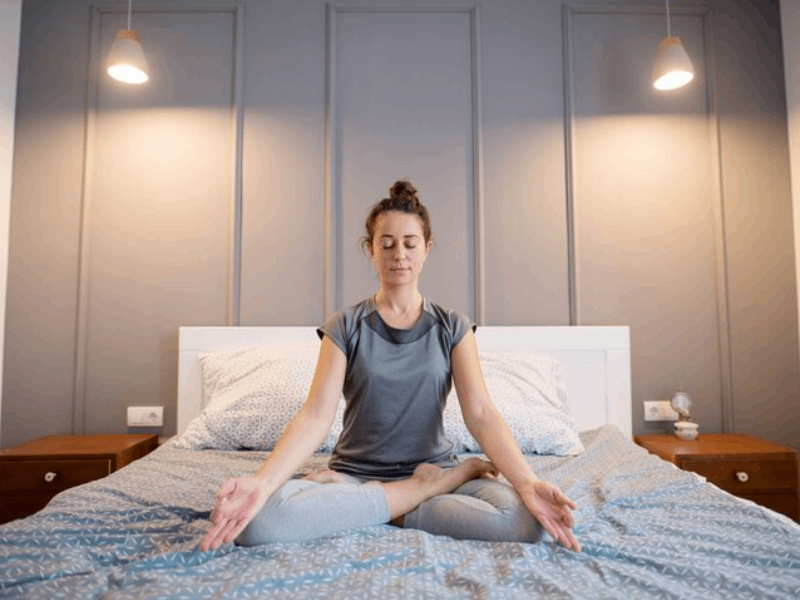
Struggling with restless nights or stress-filled evenings? Guided meditation for better sleep and relaxation can help you calm the mind, release tension, and transition smoothly into deep, restorative rest. By combining soothing audio instructions with relaxation techniques, guided meditation provides structure and focus, especially for beginners who may find silent meditation challenging.
In today’s high-stress world, consistent sleep is critical for mental clarity, emotional balance, and overall well-being. Using guided sessions, either at home or via apps, can make it easier to fall asleep faster, stay asleep longer, and wake up refreshed.
This guide explores effective guided meditation techniques for sleep, practical tips for integrating them into your nightly routine, and the benefits of pairing meditation with music for optimal relaxation.
For complementary strategies, see: Meditation Music for Sleep: How It Improves Deep Rest.
How Guided Meditation Improves Sleep
Guided meditation supports better sleep by:
- Reducing Stress and Anxiety: Calms racing thoughts that keep you awake.
- Promoting Mindfulness: Encourages awareness and acceptance of the present moment.
- Relaxing the Body: Lowers heart rate and muscle tension.
- Enhancing Sleep Quality: Improves REM sleep and total sleep duration.
A 2023 study found that adults practicing guided meditation before bedtime fell asleep 15% faster and experienced 20% better sleep quality.
Step-by-Step Guided Meditation for Sleep
Step 1 – Prepare Your Space
- Dim the lights, silence notifications, and settle into a comfortable position.
- Use headphones or speakers for clear audio.
Step 2 – Focus on Breathing
- Inhale deeply and exhale slowly.
- Count your breaths or follow the instructor’s cues.
Step 3 – Body Scan
- Mentally scan from head to toe, releasing tension in each area.
- Notice sensations without judgment.
Step 4 – Visualization
- Imagine a calm, peaceful environment.
- Engage all your senses to deepen relaxation.
Step 5 – Let Go and Drift
- Allow thoughts to pass without attachment.
- Continue listening until you naturally drift into sleep.
For shorter meditations before bed, check: Meditation for Stress Relief Before Bed: A Night Routine Guide.
Tips for Maximizing Guided Sleep Meditation
- Consistency is Key: Practice at the same time every night.
- Combine with Music: Pair guided sessions with calming meditation music for deeper relaxation.
- Keep It Comfortable: Ensure a supportive chair or bed position.
- Start Small: Even 5–10 minutes can make a difference.
- Track Sleep Improvements: Notice how you feel in the morning.
Common Mistakes to Avoid
- Skipping Routine: Inconsistent practice reduces benefits.
- Multitasking: Avoid screens or distractions during meditation.
- Expecting Instant Sleep: Meditation improves sleep over time, not immediately.
- Using Stimulating Audio: Avoid upbeat or loud tracks.
Conclusion
Guided meditation for better sleep and relaxation is a practical, beginner-friendly tool to calm the mind, reduce stress, and enhance restorative sleep. By following structured sessions that focus on breathing, body awareness, and visualization, you can train your mind to transition smoothly from wakefulness to deep rest.
Pairing guided meditation with meditation music or short nightly routines further amplifies its benefits, helping you fall asleep faster, stay asleep longer, and wake up refreshed. Consistency and a dedicated sleep environment are key to unlocking the full potential of these practices.
Ready to enjoy deeper, more restorative sleep? Start your guided meditation for sleep tonight and wake up refreshed and recharged!